4th Monday Speaker Series on the “Nature of Rappahannock”: Amphibian Conservation with Brian Gratwicke
November 24, 2025 @ 6:30 pm - 7:30 pm
Please Join
RLEP and the Rappahannock County Library(Co-Sponsors) for the 4th Monday Speaker Series on the
“Nature of Rappahannock”
Amphibian Conservation
with Brian Gratwicke
The Rappahannock region’s vernal pool-dependent amphibians represent some of Virginia’s most vulnerable yet extraordinary wildlife, requiring immediate conservation attention from local communities. These temporary woodland pools serve as critical breeding habitat for species like spotted salamanders and wood frogs, which have evolved complex life cycles perfectly timed to these ephemeral waters that fill with spring rains and dry by summer, providing predator-free nurseries for their larvae.
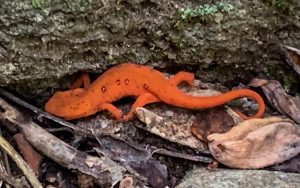
Local residents can make a significant difference by protecting these often-overlooked wetlands on their properties, maintaining fishless habitats and forest buffers around seasonal pools, and participating in citizen science monitoring programs that track amphibian populations. While some species like the abundant redback salamander thrive in the region’s deciduous forests, Virginia’s native hellbenders—massive aquatic salamanders reaching up to two feet long—face severe threats from warming stream temperatures and habitat degradation throughout their Appalachian range. Perhaps most precarious are the endemic Shenandoah salamanders, found only on the 3 highest peaks in the Shenandoah National Park where they exist as isolated populations on these “sky islands,” increasingly threatened by rising temperatures that push them toward mountain summits with nowhere higher to retreat.
Brian Gratwicke will discuss some of the unique challenges and opportunities for amphibian conservation. He is a conservation biologist leading amphibian conservation at the Smithsonian’s National Zoo and Conservation Biology Institute, and focuses on protecting amphibians in Appalachia and Panama through research, public outreach, and developing tools for reintroduction into the wild. Brian co-leads the Panama Amphibian Rescue and Conservation Project, which safeguards species threatened by the deadly chytrid fungus, studies beneficial skin bacteria and genetic resistance, and researches emerging diseases and climate change impacts on Appalachian salamanders.
Attendance at the library is limited to 40 people. Use the link below to sign up to attend in person.